Streamlined Restaurant Operations
Reduced manual task management and improved workflow efficiency.
Azati’s team developed a voice-command-based system that automates routine workflows in restaurants, ensuring efficient management through seamless task processing and speech recognition.
accuracy in recognizing core voice commands across multiple languages
reduction in service delays
faster task completion


The customer needed to eliminate the constant operational chaos caused by misheard orders, inefficient task delegation, and the lack of a structured workflow. Staff often forgot tasks, misinterpreted verbal instructions during busy hours, and struggled to coordinate responsibilities in a fast-paced environment. The client sought a hands-free, accurate, and reliable solution that would streamline communication, automate routine actions, and reduce dependency on manual task tracking, ultimately improving service speed and consistency.
The system required proficiency in English, Spanish, and French. Mechanisms for recognizing and processing diverse language-based requests were designed to cater to multilingual customers.
Customers and employees needed the freedom to issue voice commands naturally without adhering to strict formats. The system was trained to identify and interpret informal commands accurately.
The customer requested a solution deployable on low-power devices such as laptops. Optimizing the machine learning model for resource efficiency was critical to ensure local deployment feasibility.
Collected voice samples from both customers and staff to reflect real restaurant acoustics: background noise, overlapping speech, clattering dishes, and varied microphone distances. Audio was cleaned using noise reduction filters, normalized, segmented into manageable chunks, and labeled according to command categories. This dataset became the foundation for accurate speech recognition and intent extraction.
Integrated Whisper as the core ASR engine and fine-tuned it on domain-specific vocabulary (menu items, staff terminology, customer phrases). Whisper.cpp was applied to compress and quantize the model for deployment on low-power laptops without GPU acceleration. We conducted latency optimizations, reducing average command-to-text conversion time from ~820 ms to ~340 ms on commodity hardware.
Implemented a multi-layer NLP pipeline combining NER models, command classifiers, and rule-based disambiguation. The NER model was trained on custom entities (e.g., TABLE_NUMBER, ACTION, ITEM, REQUEST_TYPE). The classifier distinguished between customer-generated and staff-generated commands. Additional logic resolved ambiguous phrasing such as 'Could you bring something else for table 2?' by extracting required attributes and mapping them to operational tasks.
Analyzed text and acoustic features to differentiate polite requests from urgent or corrective commands. For example, tone-based indicators helped detect priority tasks like 'I need a waiter now' or 'The bill, please, quickly.' This ensured the system could escalate tasks and assign them to the nearest available staff member.
Constructed a command dataset covering over 40+ unique operational intents. Conducted iterative training, evaluation, and error analysis to reduce false positives (e.g., accidental triggers from casual conversation). Implemented quantization and pruning to reduce model size by 38% while maintaining accuracy. Benchmarked performance across three hardware classes to ensure smooth operation even on low-spec devices.
Built a functional prototype demonstrating the complete pipeline: voice capture → ASR → NLP parsing → task generation → real-time updates. The POC included a monitoring dashboard visualizing queued tasks, timers, execution statuses, and error cases. We verified edge cases like overlapping speech, non-command phrases, multilingual transitions, and staff noise interferences.
Developed local-first architecture ensuring the system works without stable internet: Whisper.cpp handled offline ASR; NLP ran on a lightweight local server; communication between devices used a low-latency websocket-based protocol. Created seamless integration with staff mobile devices, internal dashboards, and restaurant management systems for automated task distribution and completion tracking.
Bring your complexity. We'll bring the plan. Tell us about your project and we'll get back within one business day.
Inquire for more infoThe system supports multiple languages, enabling restaurants to serve diverse clientele efficiently. By recognizing English, Spanish, and French commands, it ensures that all customer and staff requests are correctly processed without language barriers.
This module allows staff and customers to interact with the system using natural speech, without predefined phrases. Commands are interpreted contextually, including informal or incomplete sentences, providing a seamless and intuitive user experience.
Enables local deployment on laptops or low-power devices, making the system accessible without major infrastructure upgrades.
Automatically converts recognized voice commands into tasks assigned to staff members. Tasks are tracked in real-time with timers, reminders, and dashboards, allowing management to monitor operations, identify bottlenecks, and ensure timely completion.
Reduced manual task management and improved workflow efficiency.
Enabled natural voice commands for a smoother dining experience.
Optimized for low-resource devices, allowing wider adoption without infrastructure upgrades.
Demonstrated system readiness and performance for full-scale implementation.
Complex food ordering solution with web portal and mobile apps.
Interconnected apps redefining ordering and payment flow in venues.

Enhanced API and functionality for trading and procurement operations.
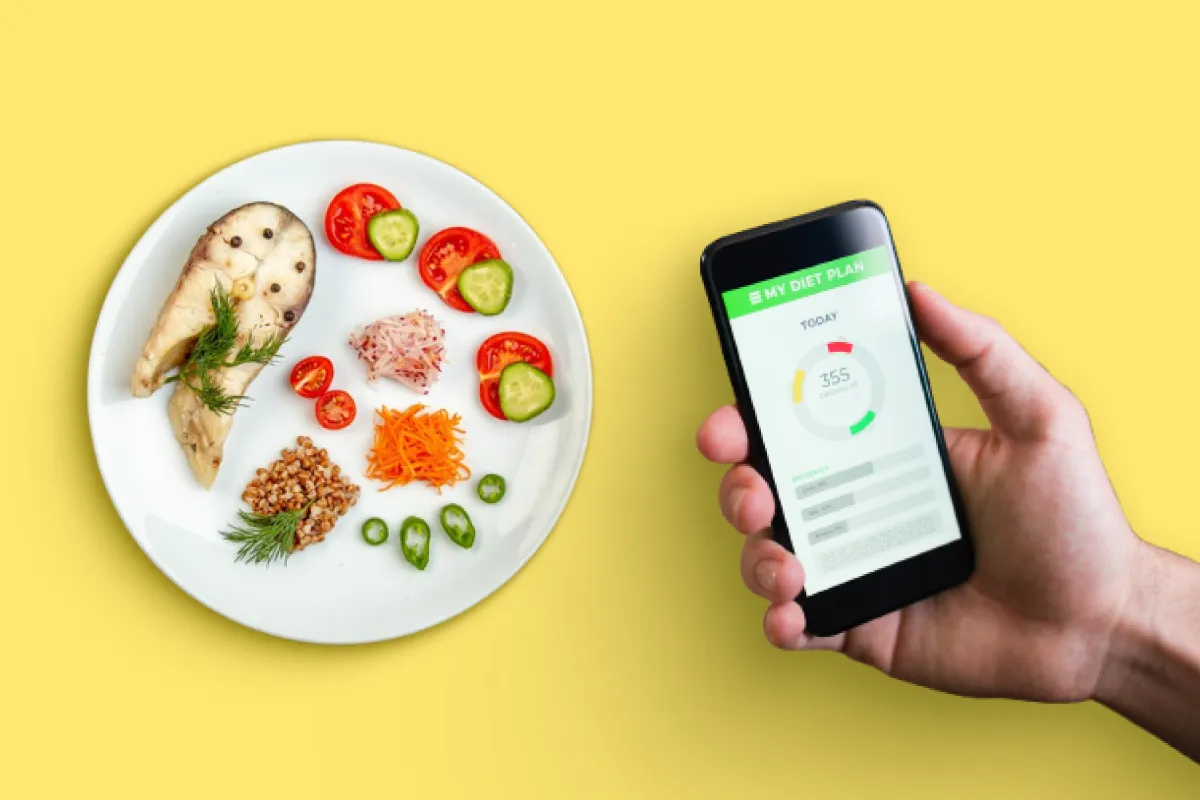
AI-powered calorie counting app estimating dish calories through image analysis.
Last updated
